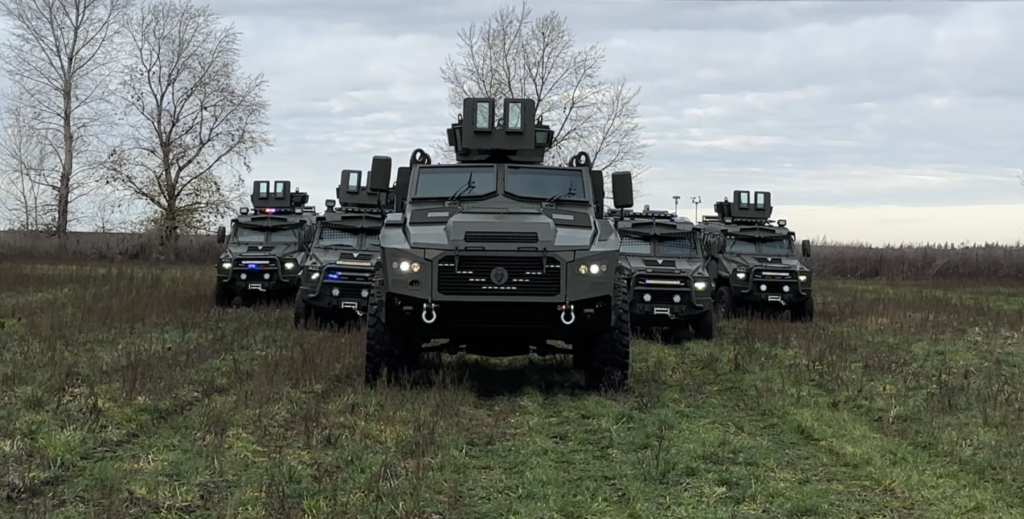
During the development of the MAC OWL armored vehicle, the company’s engineers analyzed combat operations around the world over the past 30 years, compared infantry fighting vehicles from different manufacturers and worked on the concept of a universal combat vehicle. Crew protection is the key objective of an any infantry fighting vehicle, which is why MAC OWL features truly strong armor while retaining both maneuverability and speed.
“We designed the capsule structure to provide high ground clearance, which is why our mine protection level meets STANAG 4a/b. Most of our competitors have protection rated at STANAG 3a/b. This means our infantry fighting vehicle can withstand the detonation of 10 kilograms of TNT under any wheel and 10 kilograms beneath the hull,” says the chief engineer of MAC OWL.
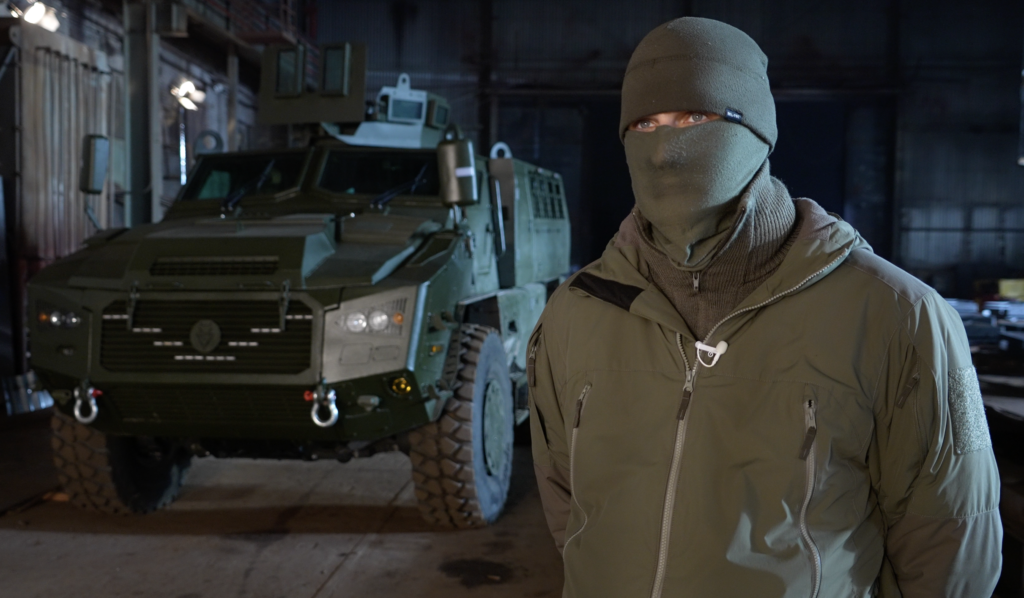
The primary armor is designed as a two-layer structure – a so-called “sandwich panel.” The main protective layer is made of armored steel and stops direct fire, while the inner layer consists of polymer materials that can withstand prolonged fire exposure and contain fragments.
The OWL’s level of ballistic protection is rated at STANAG 4569 Level 4а. However, its armor thickness is 16 mm, which effectively places the vehicle in the MRAP class. “Typically, vehicles of this type have armor thickness of 10-12 millimeters,” the engineer explains.“Ours is 16 millimeters. We did this, so the vehicle could withstand sustained fire while operating in an ambush.”
If required, MAC OWL’s protection can be reinforced with external ceramic elements, increasing the level of armor protection to 14.5 mm caliber. However, in next-generation warfare, heavy armor is no longer the sole decisive factor. Without AI, electronic warfare systems, and reconnaissance capabilities, an armored vehicle remains vulnerable. That is why OWL is equipped with a 360-degree situational awareness system with automatic detection of targets and obstacles, as well as an electronic warfare suite.
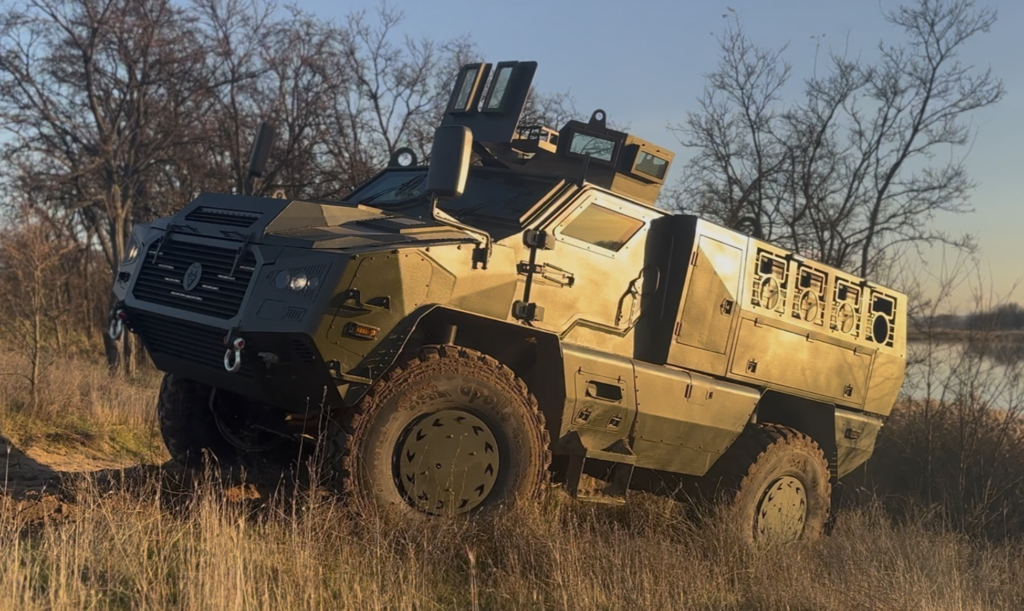
At the same time, the armored vehicle remains highly maneuverable and fast. It can ford water up to 1,200 mm without prior preparation and cross ditches up to 800 mm wide. Its allowable climbing angle is 60°, and the maximum lateral tilt angle is 21°. Speed depends on various factors (terrain, additional armor, etc.), but the vehicle can reach up to 100 km/h and has a range of 700 km in mixed driving conditions.
For additional crew safety, the vehicle is equipped with an automatic fire suppression system: AFDSS mechanisms instantly detect and extinguish fires in both the crew cabin and the engine compartment. MAC OWL also features an independent liquid-cooling system, allowing operation in the harshest conditions without overheating. Another goal the engineers set at the start of the project was to make the vehicle as easy to maintain as possible.
“Our vehicle is a monocoque. It’s a single, integrated capsule in which all components and systems are directly mounted. The engine with the gearbox is one unit, the running gear is a few other units. So, if something breaks, you simply remove the specific module, install a replacement, and keep going. You don’t need complex tools or special skills – it can all be done in the field,” explains the chief engineer of MAC OWL.
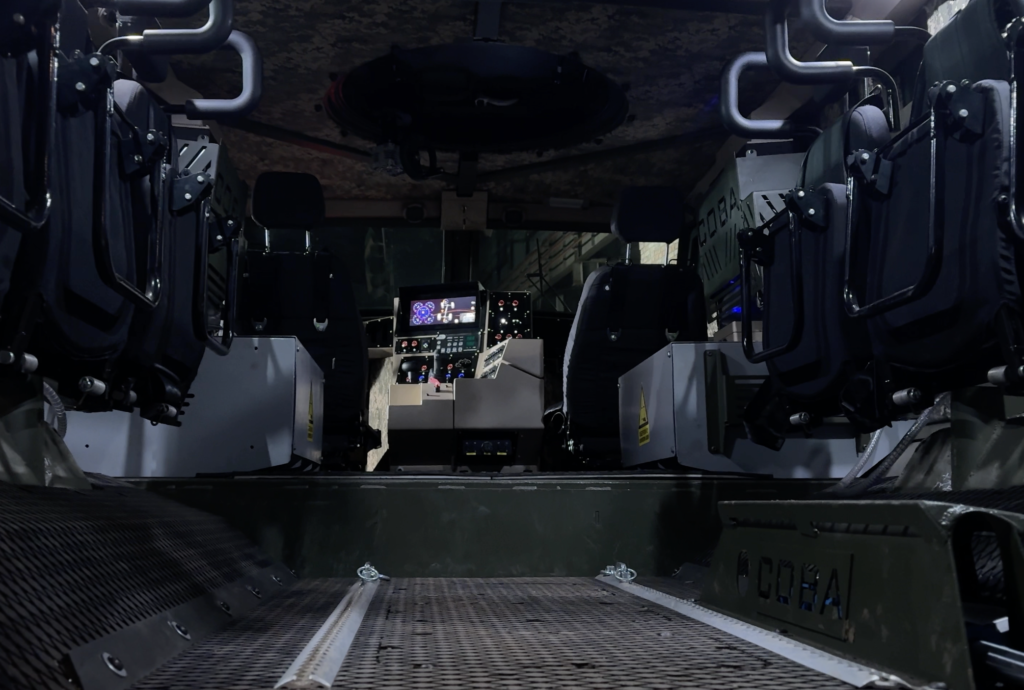
If needed, the vehicle can be converted into a medevac in just a few hours. The turret (in the current version of the AFV, designed for a Browning machine gun) is removed and replaced with a special cover. The side seats for troops are swapped out for stretchers, and a medic’s chair is installed in the center. The vehicle also features gas-filled shock absorbers, making the ride exceptionally smooth – a significant advantage when evacuating the wounded. The MAC OWL developers also didn’t overlook basic crew comfort: – the vehicle comes equipped with both heating and air conditioning. Work on this project lasted over a year, during which the engineers consulted with representatives from the Defence intelligence of Ukraine.
 English
  Ukrainian